AI-Powered Customer Onboarding: First Impressions on Autopilot
Mathew Munyao
Founder, Arttention Media
Customer onboarding sets the tone for every business relationship. Done well, it creates confident, engaged customers who understand your value and stick around long-term. Done poorly, it creates confusion, frustration, and early churn that costs more than the initial sale.
Most businesses handle onboarding manually — scattered emails, inconsistent information, delayed responses, and processes that vary depending on who's available. AI-powered onboarding eliminates these problems while delivering personalized experiences that scale infinitely without adding staff.
Why Manual Onboarding Fails at Scale
Traditional customer onboarding relies on human staff to guide new customers through setup processes, answer questions, and ensure successful implementation. This approach works for small numbers of customers but breaks down as businesses grow.
Staff availability becomes a bottleneck. New customers wait for responses while onboarding specialists handle other priorities. Information gets missed or communicated inconsistently. Follow-up timing depends on individual memory rather than systematic processes.
The result is an onboarding experience that varies dramatically based on timing, staff availability, and individual communication styles. Some customers get excellent attention while others feel neglected from day one.
How AI Transforms Customer Onboarding
AI-powered onboarding systems deliver consistent, personalized experiences for every customer, regardless of volume or timing. The AI guides customers through setup processes, answers questions immediately, and tracks progress automatically.
These systems adapt to customer behavior and preferences. If someone prefers detailed written instructions, the AI provides comprehensive guides. If they learn better through interactive conversation, the AI walks them through each step personally.
The AI never gets overwhelmed, never forgets follow-up tasks, and never provides inconsistent information. Every customer gets the same high-quality attention, whether they're the first customer of the day or the hundredth.
Components of Effective AI Onboarding
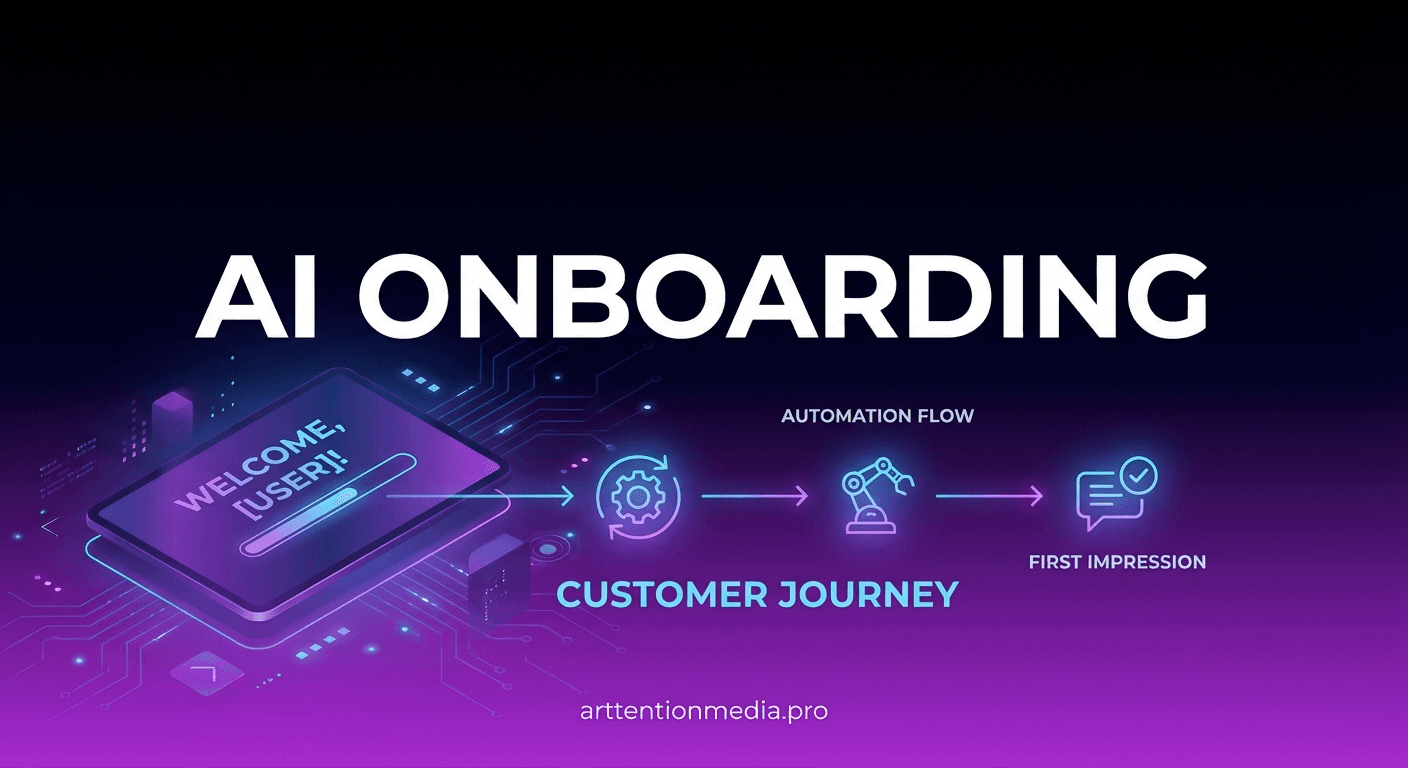
Successful AI onboarding systems handle multiple customer touchpoints through a coordinated workflow. Welcome sequences introduce customers to your business and set expectations. Setup assistance guides customers through account creation, configuration, and initial use.
Progress tracking monitors customer advancement through onboarding milestones and identifies customers who get stuck or disengaged. Proactive support reaches out to customers who haven't completed key steps or haven't engaged recently.
- Automated welcome sequences with personalized messaging
- Interactive setup guides that adapt to customer responses
- Document collection and verification workflows
- Training and education content delivery
- Progress tracking and milestone notifications
- Proactive support for stuck or inactive customers
- Feedback collection and satisfaction monitoring
The system integrates with your business tools to update customer records, trigger internal notifications, and ensure nothing falls through cracks. Staff receive alerts when customers need human attention while routine tasks happen automatically.
Personalization at Scale
AI onboarding systems excel at delivering personalized experiences without manual customization. The AI analyzes customer information, preferences, and behavior to adapt communication style, pacing, and content recommendations.
A customer who signs up for financial services gets different onboarding than someone purchasing software tools. The regulatory requirements, setup complexity, and success metrics are completely different, and the AI adapts accordingly.
Within similar customer types, the AI still personalizes based on engagement patterns. Highly engaged customers get advanced features introduced quickly. Cautious customers receive more explanation and reassurance. The experience feels individually crafted while running completely automatically.
Reducing Onboarding Friction
Customer onboarding often involves complex forms, document uploads, verification processes, and configuration steps. Each friction point creates opportunities for customers to abandon the process before completion.
AI systems reduce friction by breaking complex processes into digestible steps, providing real-time assistance, and handling background processing automatically. Instead of overwhelming customers with everything at once, the AI guides them through logical sequences.
When customers upload documents, the AI extracts relevant information automatically. When they make configuration choices, the AI explains implications and suggests optimal settings. When they encounter errors, the AI provides specific solutions instead of generic error messages.
Proactive Problem Prevention
The best AI onboarding systems prevent problems rather than just responding to them. By analyzing patterns from successful and failed onboarding attempts, the AI identifies where customers typically struggle and intervenes proactively.
If data shows that customers who don't complete setup within 48 hours are likely to churn, the AI reaches out with assistance before the deadline. If certain configuration choices typically cause problems later, the AI warns customers and suggests alternatives.
This proactive approach prevents customer frustration and support tickets while improving overall onboarding success rates. Problems get solved before customers even realize they exist.
Integration with Business Systems
AI onboarding systems need deep integration with your existing business tools to deliver seamless experiences. The AI should access customer records, update account information, trigger billing processes, and coordinate with other business functions.
When a customer completes onboarding milestones, the system automatically updates their status in your CRM, enables appropriate system access, and notifies relevant team members. This coordination ensures nothing gets missed and customers don't experience delays between onboarding completion and service activation.
The integration also enables sophisticated reporting on onboarding performance. You can track completion rates, identify bottlenecks, measure time-to-value, and optimize the process based on real customer behavior data.
Measuring Onboarding Success
AI systems provide detailed analytics on every aspect of customer onboarding. Completion rates show how many customers finish the process successfully. Time-to-completion reveals how quickly customers become fully onboarded. Drop-off points identify where customers abandon the process.
More sophisticated metrics track customer engagement levels, satisfaction scores, and early usage patterns. These indicators predict long-term customer success better than simple completion rates.
The data enables continuous optimization. If customers consistently struggle with specific steps, the process can be simplified. If certain types of customers have different success patterns, the AI can adapt its approach accordingly.
Human-AI Collaboration in Onboarding
While AI handles routine onboarding tasks automatically, human staff remain essential for complex situations, relationship building, and strategic guidance. The best systems create clear divisions between automated and human responsibilities.
AI manages welcome sequences, document processing, basic questions, and progress tracking. Humans handle complex configurations, relationship discussions, custom requirements, and escalated problems. The AI knows when to involve humans and provides complete context for seamless handoffs.
This collaboration model allows businesses to handle much larger customer volumes without proportional increases in staff, while ensuring every customer gets appropriate attention for their specific needs.
Our AI onboarding system handles 85% of customer setup automatically. Our team focuses on strategic conversations and complex implementations while every customer gets immediate, consistent support from day one.
Industry-Specific Onboarding Considerations
Different industries have unique onboarding requirements that AI systems must accommodate. Financial services need compliance verification and regulatory documentation. Software companies need technical setup and integration assistance. Service businesses need scheduling and process explanation.
AI onboarding systems adapt to these industry-specific needs while maintaining consistent underlying architecture. The same system that handles regulatory compliance for financial customers can guide technical setup for software users, just with different workflows and content.
This flexibility allows businesses in any industry to benefit from AI-powered onboarding while meeting their specific customer requirements and regulatory obligations.
ROI and Business Impact
AI-powered onboarding delivers measurable business results beyond operational efficiency. Higher completion rates mean more customers become actively engaged. Faster time-to-value means customers start benefiting from your service sooner. Better early experiences lead to higher customer satisfaction and retention.
The capacity expansion is often the largest benefit. Businesses can onboard 10x more customers without 10x more staff. This scaling capability enables growth that would be impossible with manual onboarding processes.
Cost reduction comes from eliminating manual tasks, reducing support tickets, and preventing churn from poor onboarding experiences. The combination of increased capacity and reduced costs creates substantial ROI for most implementations.
Implementation Best Practices
Successful AI onboarding implementations start by mapping existing onboarding processes and identifying pain points. What steps cause the most customer confusion? Where do customers typically drop off? What questions get asked repeatedly?
The AI system should be designed around these specific problems rather than generic onboarding templates. Every business has unique customer needs, regulatory requirements, and success criteria that must be reflected in the automation.
Testing and iteration are crucial. Launch with a subset of customers, gather feedback, and refine the experience before full deployment. The AI will learn and improve over time, but starting with a strong foundation accelerates success.
FAQ
How long does it take to implement AI-powered onboarding?
Basic implementations typically take 4-6 weeks, including process mapping, system setup, content creation, and testing. Complex workflows with extensive integrations may take 8-12 weeks for full deployment.
Can AI handle complex onboarding requirements like compliance verification?
Yes, AI systems excel at document processing, verification workflows, and compliance checking. They can handle regulatory requirements more consistently than manual processes while flagging complex cases for human review.
What happens when customers need human assistance during AI onboarding?
AI systems include escalation protocols that seamlessly transfer customers to human staff with complete context about their progress and specific needs. Customers never repeat information or restart processes.
How do we measure the success of AI onboarding systems?
Key metrics include completion rates, time-to-completion, customer satisfaction scores, support ticket volume, and early usage patterns. These indicators reveal both operational efficiency and customer success outcomes.
Can AI onboarding work for businesses with highly customized services?
AI systems adapt to customer-specific requirements through dynamic workflows and conditional logic. They can handle customization while maintaining consistency in core processes and communication quality.
Take it further with Arttention Media
Explore the services behind the ideas in this article:
Mathew Munyao
Founder, Arttention Media
Mathew is the founder of Arttention Media, an AI-powered digital agency serving businesses globally. With 6+ years in digital marketing and AI, he leads a team that has deployed dozens of websites, generated hundreds of qualified leads for clients worldwide, and built custom AI agents for businesses across multiple continents.
Ready to grow your business?
Book a free consultation — no pressure, just honest advice about what will work for your industry.
Book a Free Consultation →